

Hanoi—The Vingroup of Vietnam is actually a fairytale of how a young Vietnamese in 1993 parlayed his instant noodle business in Ukraine into a multi-billion-dollar conglomerate. And now, Vingroup’s ecosystem continues to steamroll its way to the global stage, fueled by a fresh investment of 10 trillion Vietnamese dong (VND), or roughly $380 million.
When Vingroup announced its new company, VinMetal, in September 2025, and the staggering sum to support it, the news stunned Vietnam’s corporate world. The country’s largest private group was moving into steel, a sector long seen as the backbone of heavy industry, marking the latest move in a much larger plan to tighten control over materials that will power Vietnam’s next phase of industrial rise. And its Asian neighbors, like the Philippines, are closely watching.
The company is investing to produce civil-construction steel, hot-rolled steel, and high-strength alloys, with early production aimed at supplying Vingroup’s own network, including steel for Vinhomes’ construction projects and VinFast’s electric vehicles, as well as materials for significant infrastructure works like the North–South high-speed railway, the Ho Chi Minh City–Can Gio route, and the Hanoi–Quang Ninh corridor. Over time, VinMetal also plans to expand production with an eye toward export. “VinMetal is not just a steel plant,” Nguyen Viet Quang, vice chairman and CEO of Vingroup and CEO of VinMetal, said in the statement. “It represents a strategic preparation for a modern, green, and sustainable infrastructure future for Vietnam.”
Grand design
The launch of VinMetal underscores how far Vingroup has traveled from its real-estate roots. Since 2017, when it redefined its focus around Industrials and Technology, Real Estate and Services, and Social Enterprises, the group has steadily built toward a self-contained ecosystem capable of sustaining growth across multiple industries, organized into five pillars: 1. Industrials & Technology: VinFast and VinMetal 2. Real Estate & Services: Vinhomes and Vinpearl 3. Infrastructure: VinSpeed 4. Energy: VinEnergo 5. Social Enterprises: Vinmec, Vinschool, VinUni, and the Kind Heart Foundation.
Just weeks before VinMetal’s debut, VinFast introduced the Lac Hong 900 LX fleet, both standard and armored models, to serve world leaders during Vietnam’s 80th National Day celebrations in Hanoi. Built to international armored standards, the vehicles stood as symbols of a nation that no longer looks abroad for capability. Alongside the Vietnam Exposition Center, a 900,000-square-meter project finished by Vingroup in less than a year, these achievements reflect a consistent pattern: rapid execution anchored by financial strength and a capacity to mobilize entire industries toward a shared goal.
By mid-2025, Vingroup’s total assets had reached 964.4 trillion VND, about $39 billion, with consolidated revenues of 130.4 trillion VND in the first half of the year alone. Six of its flagship brands—Vinhomes, VinFast, Vinpearl, Vincom Retail, Vinschool, and Vinmec—were named among Vietnam’s 100 most valuable by Brand Finance, underscoring the breadth of an ecosystem that now spans nearly every corner of Vietnam’s modern life.
Pham Nhat Vuong’s fairytale
Founder Pham Nhat Vuong’s story is one for the books. In 1993, he turned instant noodles into a billion-dollar brand in Ukraine. At that time, Ukraine’s consumers craved simple, affordable goods. Into that moment stepped a young Vuong, who in 1993 founded Technocom. Its product was humble—instant noodles—but within a decade, Mivina, the brand he created, had become a household name. By 2004, more than 95 percent of Ukrainians recognized the name, and three out of four consumed the product regularly. Revenues exceeded $150 million annually, and the brand’s valuation crossed the billion-dollar mark. For many Ukrainians, “Mivina” became a generic term for instant noodles and their unofficial word for dinner. When Vuong sold Technocom, he didn’t just bring home wealth—he brought home a blueprint that became Vingroup: a vertically integrated, socially conscious, hyper-ambitious machine that now touches everything from housing and healthcare to education and electric taxis, 32 years later.
VinMetal will soon produce Vietnam’s first privately made steel, securing a domestic supply for construction and manufacturing. VinEnergo is building a renewable-energy backbone to power factories, homes, and transport. VinSpeed, the infrastructure arm, is modernizing railway and logistics networks. And through Vinmec, Vinschool, and VinUni, Vingroup invests in human capital—training engineers, supporting research, and improving healthcare. Together, these enterprises form a self-sustaining cycle of production, innovation, and knowledge that keeps value creation within the country.
Poster child
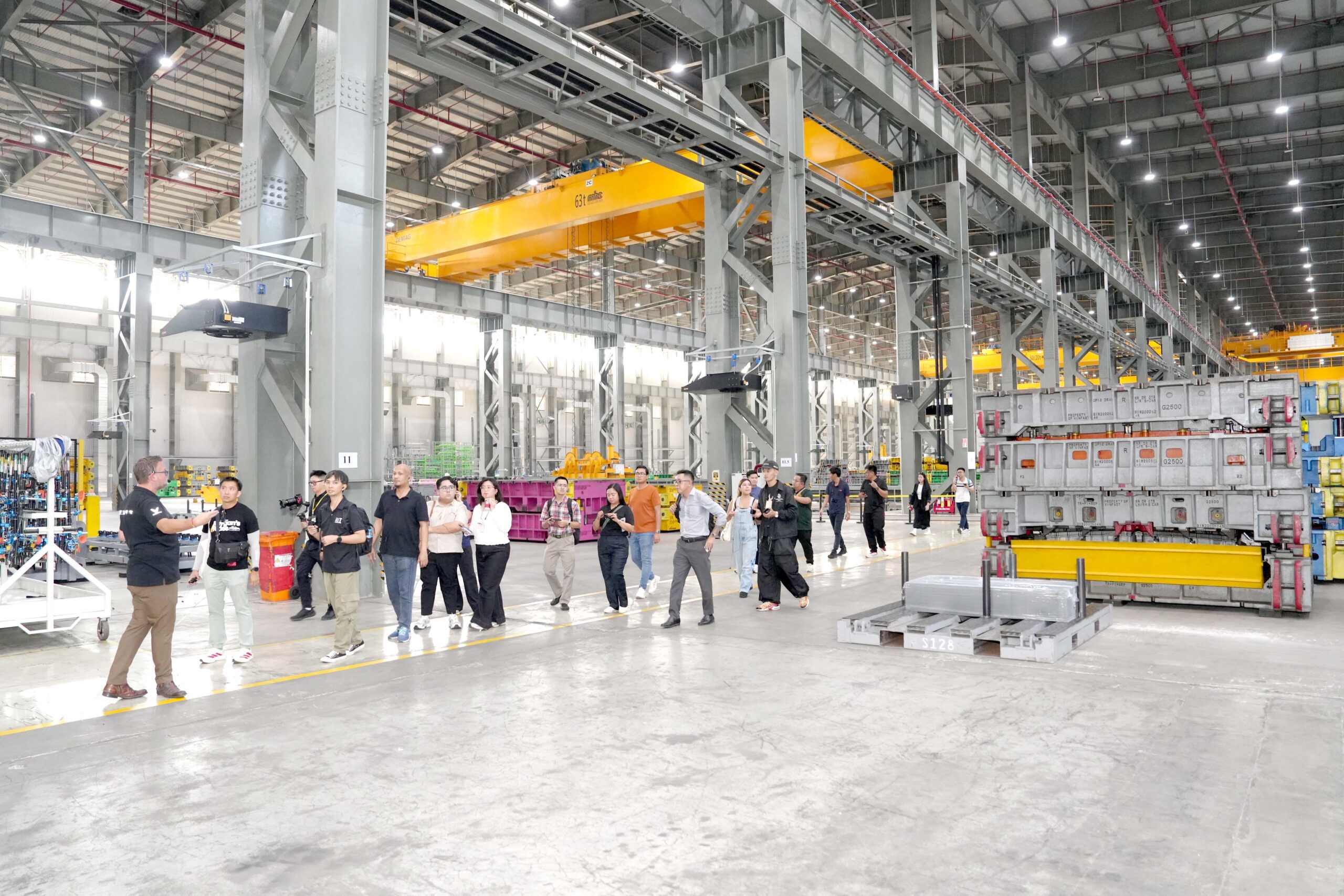
VinFast is the poster child of this strategy. Its Hai Phong complex rose in just 21 months. V-Green built 150,000 charging stations. Xanh SM’s cyan taxis hum through Hanoi. ViVi, the Vietnamese voice assistant, chats from dashboards. And VinRobotics is quietly coding the future of precision manufacturing.
Through VinFast, Vingroup is exporting a model. In the Philippines, Indonesia, and India, VinFast’s expansion mirrors the approach that worked in Vietnam by building a complete supporting infrastructure. At home, the group continues to balance profit with purpose. Through its Kind Heart Foundation, Vingroup directs billions of dong each year toward scholarships, healthcare, and disaster relief, ensuring that growth and compassion move in parallel. When Typhoon Bualoi struck in September 2025, the group pledged billions of VND to rebuild homes and support affected families, working with local authorities to deliver aid quickly and transparently.
That same spirit of giving and caring extended beyond Vietnam’s borders. In the Philippines, VinFast and its local partner Green GSM promptly provided financial assistance and on-the-ground support after the recent Cebu earthquake. For Vietnam, the ecosystem means jobs, technology transfer, and industries that grow from local roots. For partners like the Philippines, it offers access to a ready-made clean mobility network without waiting for public subsidies to catch up. In both cases, the model demonstrates how a private enterprise can complement national development instead of competing with it. In 2024, Vingroup paid more than 56 trillion VND in taxes, ranking among Vietnam’s largest private contributors to the national coffers. In 2025, TIME magazine named Vingroup one of the World’s Best Companies, marking it as the first Vietnamese enterprise to make the list, citing its performance, sustainability, and employee satisfaction. Vietnam, through Vingroup, has arrived on the global stage.
The VinFast example
Like a snowball gathering speed, each success feeds the next until the entire system moves as one. VinFast is the most visible proof of that momentum. Its electric-vehicle complex in Hai Phong rose from coastal ground in just 21 months, a pace that startled even industry veterans. Vingroup, at the time, had already mastered the logistics of building cities, hospitals, and schools. When it turned to automobiles, the same machinery of expertise followed. V-Green, founded by chairman Pham Nhat Vuong, built the charging infrastructure that now dots Vietnam’s highways and city centers, with 150,000 stations and counting, aiming for half a million by 2028. Its sister company, Xanh SM, operates an all-electric taxi fleet powered by that same grid, its cyan cars now woven into Hanoi’s daily rhythm. For millions of riders, the quiet hum of those vehicles is their first encounter with an electric future. Behind the scenes, the rest of Vingroup works in step. Vinhomes developments host charging stations and showrooms, giving residents incentives to adopt EVs. In the group’s tech labs, engineers refine ViVi, the Vietnamese voice assistant that speaks from VinFast dashboards, linking software and lifestyle through one ecosystem. Farther along the chain, new players are emerging. VinEnergo is building a renewable-energy network to power factories and neighborhoods. VinMetal is preparing to roll out low-carbon steel for both vehicles and skyscrapers. And VinRobotics, launched in 2024, is developing automation and AI systems that could one day guide production with microscopic precision.
Together, they form the industrial skeleton that will support Vietnam’s next leap forward. Even as those pieces take shape, VinFast continues to refine the human side of ownership. It offers long warranties, mobile service vans, and buyback programs designed to calm the hesitation of first-time electric buyers. With a reliable after-sales network, early adopters have become the brand’s most convincing advocates. VinFast stands on the strength of an ecosystem that gives it the time and resources to learn and adapt quickly. Industry observers call VinFast’s rise remarkable. In 2024, it sold more than 67,000 electric vehicles, making Vietnam one of the few markets where EVs outsold gasoline cars. By September 2025, monthly deliveries reached nearly 14,000 units, bringing the nine-month total to over 103,000, the highest ever recorded in Vietnam’s automotive history.
Share post:
Malaya Business Insight comes to you in a very readable package: A fusion of in-depth news, excellent news analyses, the credible prognosis of events, powerful commentaries and balanced updates on what is happening and about to happen in corporate board rooms, in the diverse business and industry sectors, in Philippine regional and global politics and in the exciting world of sports, arts, entertainment, and lifestyle.
© 2025 Malaya Business Insight.
All Rights Reserved.
Developed by Neitiviti Studios


Leave a Comment